Stupid Essay Questions

Below is a sample of the ridiculous essay questions I’ve been asked to provide answers to as part of my program/project management applications (all 100% real!):

  • How do you balance Agile principles with the need to meet business deadlines and stakeholder expectations?
  • What Agile metrics do you find most valuable for tracking delivery performance, and how do you use them to drive improvements?
  • How to you handle cross functional dependencies and coordination in an agile environment?
  • What does a healthy Agile culture look like to you?
  • Please briefly describe how you keep projects on track?
  • What is the most significant challenge to scaling a business, and how did you overcome this challenge in your prior position(s)?
  • Can you provide an example of a workflow automation or API integration project you have led?
  • How have you handled risk mitigation and problem-solving in past projects, particularly in data conversion or integration scenarios?
  • How has good project governance helped you to ensure a project stays on track?
  • Describe your approach to leadership
  • Describe your approach to clearing blockers for technical personnel on your agile team.
  • Can you provide a specific example of how you implemented service management discipline within a project or organization? What were the measurable results?
  • Provide a detailed overview of your experience managing B2B commerce projects. Please include the platforms used, the types of customers (industry/business), the total project scope, and your role as PM.
  • How do you ensure stakeholders are engaged and supportive of new processes and tools? Can you share a successful change management strategy you implemented.
  • How would you approach understanding the current project landscape and identifying the most pressing needs?

The TA process is broken, but expecting applicants to provide you written answers to make “the job easier,” isn’t going to bring talent into your organization.

Applicants: Take a hard pass on anyone asking you for free work. Your intelligence and experience is what you sell. If you are foolish enough to answer questions like this, be assured that every answer, every insight will be stolen, re-used, and shared with another candidate. One who is cheaper, or off-shore, or a nephew of the hiring manager. After that, it will be processed by a LLM. The payout for for all your work: Zero.

Employers: This isn’t Costco. Stop asking for free samples.

+++

Copyright 2025 Pierce/Wharton Research, LLC. All rights reserved. No part of this post shall be reproduced without permission.

Quickest Way to Fix the Hiring Process: The Rejected Candidate Survey

I think CEOs and BODs and would be stunned by the damage done to their company’s reputation and brand as a result of a poor hiring managers. In my previous post, I make the argument to remove hiring managers from the hiring process. But, if you really want to know what your hiring managers are doing to your company’s brand and reputation, send a “Rejected Candidate Survey” to every candidate who interviews with anyone who represents your company.

Hiring managers seem to be the only role in a company completely protected from “feedback.” That needs to change.

I’d recommend the following questions (Strongly Disagree <-> Strongly Agree)

  1. The interviewers were prepared and engaged.
  2. I had adequate time to present my skills and experience.
  3. I understood the job’s responsibilities, goals, and how my work fit into the department/organization.
  4. The interviewer(s) represented the company and brand in a professional and positive manner.
  5. The recruiter/interviewers communicated with me throughout the entire recruitment process.
  6. My time was respected.
  7. I left with a positive view of the company, brand, and culture.
  8. The on-line application process was user friendly.
  9. I would consider other employment opportunities at the company.
  10. I would recommend my friends or other associates to seek employment at the company.

Stop wasting your IT talent with stupid pop-ups in the middle of an on-line app, and annoying notifications asking me to evaluate your application’s web page! I’m not your QA ! Log on, parse some resumes, and do it yourself! Better yet, Mr. Hiring Manager, Executive VP, CEO, and HR director — log into your application site and (try to) apply. That’ll tell you everything you need to know about the application experience. What you don’t have is metrics on the interview experience – and that is a serious problem.

Your Brand and Reputation

Companies spend millions of dollars on marketing and branding. They host lavish sales conferences, publish brand guidelines, train and supervise sales staff during client interactions, and monitor external correspondence all to ensure that the company is on point, on message, and being represented in the best possible light.

However, these same companies allow anyone to interview!! What is overlooked in this external touchpoint is the irreparable damage that “hiring managers” can do to a company’s image, brand, and reputation.

According to a recently LinkedIn Poll, approximately 64% of all job applicants have encountered rude, distracted, or disrespectful hiring managers during their job interviews.

If you are hiring, you need to remember this: YOU represent the brand, the company, the culture. Every interaction, every touchpoint is a chance to build or damage the brand. In many cases, YOU are the only person that applicant will ever meet from that company. S/he will walk away from that interview with an impression of the company that is inextricably intertwined with their impression of YOU.

If CEOs, BODs and executives knew how hiring managers were KILLING their company’s reputation and brand, they’d end the practice of 1:1 hiring manager interviews immediately.

The idea that anyone at any time can represent themselves as an agent of the company to external resources and vendors with absolutely zero oversight or feedback is absurd! The only reason this ridiculousness has gone on for as long as it has is because “that’s the way it’s always been….”

+++

Copyright 2025 Pierce/Wharton Research, LLC. All rights reserved. No part of this post shall be reproduced without permission.
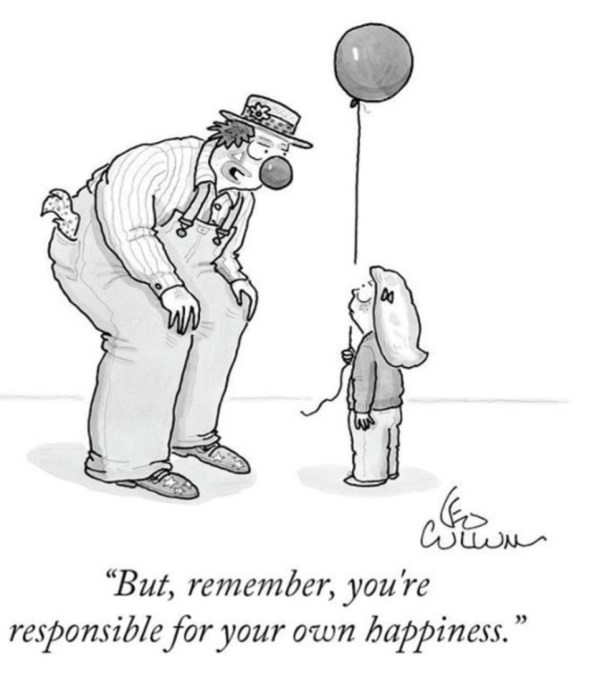
It’s Time to Remove “Hiring Managers” from the Hiring Process

The recruitment and hiring process is broken. Ask any applicant, any recruiter, and any company looking for talent. If you asked any one of those folks what the major problem was in the talent acquisition process, they all would quickly agree: “hiring managers.”

The only reason a hiring (or direct) manager is even involved in the modern hiring process is because “that’s the way it’s always been.” Well, times have changed, the nature of business has changed, and the way we hire needs to change, too.

Hiring managers need to be removed from the hiring process. Here’s why:

Hiring Managers Hire for Themselves, Not the Company

Back in the day, the HR representative actually had a say in who was hired for the company. The idea was that HR was partnered with the long-term strategic view of the company’s needs, and they had developed a “resource strategy” to enable the company to achieve those goals. HR was also there to protect the company from cronies and unqualified nephews.

Ask anyone in HR today, and they’ll tell you that might be what’s on Earnings Call PowerPoint slide, but in reality, HR is there for paperwork. The “hiring manager” is all powerful, and he will hire whomever he wants. And, if he can’t hire who he wants, he’ll just leave the job open, or rewrite the JD/SOW to exclude everyone except exactly who he wants to hire.

That’s how the game is played. Don’t hate the player….

Hiring Managers Tolerate and Foster Other Bad Managers

I’ve lost count of the number of interview prep sessions I’ve sat in on where the core competency of the applicant needed to be his ability to “Put up with <FirstName>’s shit….” I’d submit that is not a business case to spend $150K per year, plus benefits. Has anyone considered that we might get rid of <FirstName> and her shit….??

Hiring Managers Do NOT Hire “Threats”

If you have more education, credentials, and experience than the hiring manager, you can pretty much write off getting that gig. It’s not you, it’s them. They don’t want to hire someone “overqualified.” In other words: Don’t outshine the master….

Only in corporate America does this overqualified BS make any sense. Could you imagine saying, “Yeah, we passed on that neurosurgeon because he came from a top tier school, has multiple awards, and has been in practice for 20 years. I don’t need someone so overqualified cutting open my skull.”

Hiring Managers have ZERO Expertise in Hiring

There are three things we don’t have in this world: Bad Lovers. Bad Drivers. And, bad judges of character.

I’ve asked interviewers and hiring managers over the years if the company provided any guidelines or training on hiring (maybe a checklist, but not much more). I also ask how they prepared to on-board talent. Did they take any classes, webinars, read a book, blog, watch any videos on interviewing and recruitment? This is waved off with a “Naah, I’m a r-e-a-l-l-y good judge of character….” (Says the twice divorced, estranged-from-his-three-children manager with the 2.8 Glassdoor rating :/) Yeah, that’s the man who should be representing your brand and interviewing all prospective analysts….

Hiring Managers are TERRIBLE Brand Ambassadors

According to a recently LinkedIn Poll, approximately 64% of all job applicants have encountered rude, distracted, or disrespectful hiring managers during their job interviews.

I’ve been around long enough to know that one person in a global enterprise might not represent the entire culture; however, you can see why talented people walk away from a rude, distracted, disrespectful hiring manager thinking, “<CompanyName>! What a bunch of aholes!”

Worse, people are likely to retell their interview horror story to friends and family; Maybe even post about it on Glassdoor or Reddit or LinkedIn or X.

Hiring Managers aren’t-thinking about how their behavior and interactions with prospective talent might be damaging the company’s reputation and brand. CEOs need to start thinking about it…

Rude hiring managers are looking for fear, trembling, and complacency, and as long as they’re permitted to interview and hire unsupervised, they will continue to churn and burn through talent. Glassdoor ratings tumble, followed by the fake reviews posted by Finsta employees, and before you know it, everyone in the industry knows it’s a shit place to work, and the investors can’t understand why you can’t make your deadlines and can’t close on talent.

If you are hiring, you need to remember this: YOU represent the brand, the company, the culture. Every interaction, every touchpoint is a chance to build or damage your brand. In many cases, YOU are the only person that applicant will ever meet from that company. S/he will walk away from that interview with an impression of the company that is inextricably intertwined with their impression of YOU.

If CEOs, BODs and executives knew how hiring managers were KILLING their company’s reputation and brand, they’d end the practice of 1:1 hiring manager interviews immediately.

Hiring Managers Have Little/No Knowledge about the Job Itself

This is not as uncommon as you might think….

Consider the idea of the hiring manager is a hold-over from the by-gone manufacturing and trade-based economy. In this context, a shop steward or tradesman had a certain knowledge, expertise, and could evaluate the skill of the applicant’s expertise. That’s just not the case in corporate and service industries.

It’s not uncommon to encounter hiring managers who know nothing about the work I’m going to do, nor any of the projects I’ll be working on, nor little about the team or client. I’ve lost count of the number of hiring managers I’ve asked specific questions to about the work, tools, team, budget, and they cannot answer a single one!!

No one who is serious about his career is going to accept a job when his boss cannot tell him a single thing about the work! (That’s provided the hiring manager has even given you time to ask about the work. For some, your questions are superfluous because your buy-in is simply not required.)

Candidates consistently complain of long interview cycles, and “culture” fit interviews with people who know nothing about interviewing, the work, the group, or the project — it’s a waste of everyone’s time. If you cannot speak to the work, the tools, the projects or the goals, you shouldn’t be interviewing anyone.

Hiring Managers are Easily Bribed, Kickbacks are Not Uncommon

The potential for abuse is greatest with 3P managed service providers. In these situations, we have mid-level managers, many of whom don’t have the authority to pick up the tab for lunch without prior approval, “supervising” hundreds of thousands of dollars a year in CapEx 3P consultants and vendors. The entire structure is a recipe for corruption. No wonder so many companies see a marked decline in quality and customer satisfaction when managed service providers take over.

Consulting companies sell bodies; they need to keep that T&M SOW funded, that H1b employed, and that project in their pipeline. Engagement managers are going to do whatever it takes to seal the deal. Hookers, drugs, off-the-radar personal “assistants.” I’ve seen hiring managers dump their entire workload on to 3P contractor (unbeknownst to their managers). This allows them to spend more time on important things: Like travel with their mistresses…

How to Fix It – Implement a Hiring Committee

Yep, I said it. A hiring manager puts in a request to Central Casting, and it’s fulfilled. That person meets both the requirements, and the company’s needs. Now, m-a-n-a-g-e them….

The hiring team model is popular in organizations serious about talent. Hiring committees are used at Amazon, IBM, and a myriad of other organizations, big and small. Why? It protects the company from bad hires, nepotism, and cronies. It ensures a transparent and quality recruitment process. It protects the company’s reputation and brand and ensures the company is well represented in all external touchpoints.

BTW, managers aren’t just stuck with whomever is given to them; they have the ability to ask for a change or request termination. But, you can’t cherry pick resources, hire someone you want to have a beer with, or abuse your H1b contractors. Your turnover is tracked, quantified, and duly noted. As it should be…..

Eliminate 1:1 Interviews

If you don’t feel like you can get behind a committee, you should prohibit any 1:1 interviews until the Hiring Manager is fully trained and vetted. That means you actually need to have an interview training policy. In all cases, hiring managers should never be left on their own to interview prospective staff without the supervision of an HR professional.

The idea that anyone at any time can represent themselves as an agent of the company to external resources and vendors with absolutely zero oversight or feedback is absurd! The only reason this ridiculousness has gone on for as long as it has is because “that’s the way it’s always been….”

Send the Rejected Candidates a Survey

Interesting how hiring managers are only people in a company protected from “feedback.” That needs to change. If you really want to know what your recruitment process is like, hire a third-party to send any candidate who interviewed, but was rejected, a “Candidate Survey.”

I’d recommend the following questions (Strongly Disagree <-> Strongly Agree)

  1. The interviewers were prepared and engaged.
  2. I had adequate time to present my skills and experience.
  3. I understood the job’s responsibilities, goals, and how my work fit into the department/organization.
  4. The interviewer(s) represented the company and brand in a professional and positive manner.
  5. The recruiter/interviewers communicated with me throughout the entire recruitment process.
  6. My time was respected.
  7. I left with a positive view of the company, brand, and culture.
  8. The on-line application process was user friendly.
  9. I would consider other employment opportunities at the company.
  10. I would recommend my friends or other associates to seek employment at the company.

Stop wasting your IT talent with stupid pop-ups in the middle of an on-line app, and annoying notifications asking me to evaluate your application’s web page! I’m not your QA ! Log on, parse some resumes, and do it yourself! Better yet, Mr. Hiring Manager, Executive VP, CEO, and HR director — log into your application site and (try to) apply. That’ll tell you everything you need to know about the application experience.

The fact that organizations have zero feedback or metrics on the interview experience speaks to the issue.

Final Thoughts…

Companies spend millions of dollars on marketing and branding. They host sales conferences, publish brand guidelines, train and supervise sales staff during client interactions, and monitor external correspondence all to ensure that the company is on point, on message, and being represented in the best possible light.

However, these same companies allow anyone to interview. What is overlooked in this external touchpoint is the irreparable damage that “hiring managers” can do to a company’s image, brand, and reputation.

Many CEOs and BODs and would be stunned at the damage done to their company’s reputation as a result of a poor hiring process.

When you interview prospective talent, YOU are the company. Your manners, your questions, your professionalism ….they represent the company and its culture. Your culture IS your brand; and, culture eats strategy for breakfast.

If you see your company in this essay, make changes while you still can. Once your reputation is gone, you’re not going to get it back.

+++++

Copyright 2025 Pierce/Wharton Research, LLC. All rights reserved. No part of this post shall be reproduced without permission.
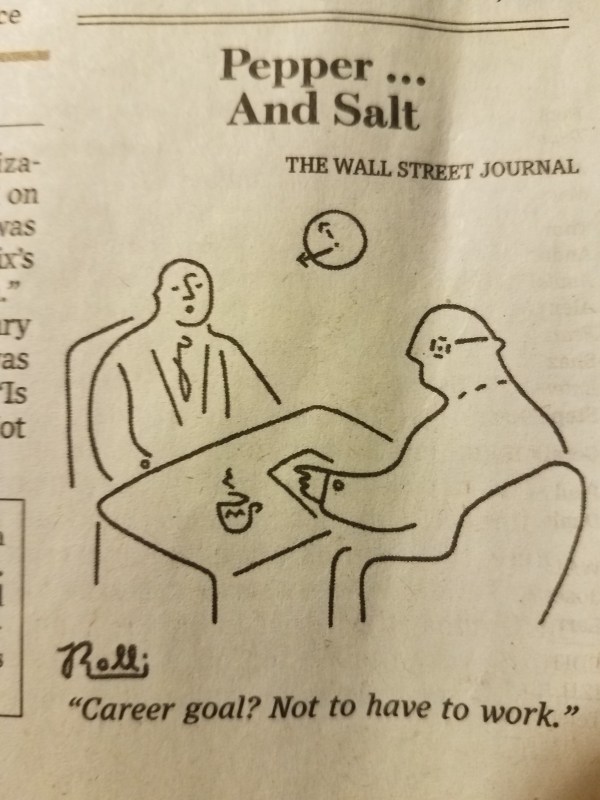
Your Applicant Wants to Record the Interview?(!)

Imagine, meeting a job applicant IRL. Perhaps at your office, maybe at a coffee shop. You sit down, introduce yourself, and then the applicant pulls out a tri-pod, sets up the phone, and says, “I hope you don’t mind if I record this…..”

What would you say?

I’m sure you would be shocked by the audacity.

You might respond with something like, “Ohh, err, I’m not comfortable with that….” or even “I don’t consent to being recorded,” to which the applicant responds…

“This is very common now. And, it’s really for YOUR benefit. In this way, I can focus on you, and our discussion, and not on taking notes! Plus, I’ll be able to review your questions and answers at my leisure, and then I’ll be able to share this video with my advisors, that way, we can all better understand the role and your company.”

Would you shrug, agree, and continue? I don’t think so…..

Stop asking people for one-way video interviews. Stop recording them. Stop bullying them into surrendering their words, image, and ideas to a 3P LLM just for the privilege of applying for a job.

If you found yourself offended by the audacity of an applicant taping you and your interview, be assured the applicant feels EXACTLY the same way! If you’re serious about bringing talent into your organization, offending applicants is not the way to do it.

+++

Copyright 2025 Pierce/Wharton Research, LLC. All rights reserved. No part of this post shall be reproduced without permission.
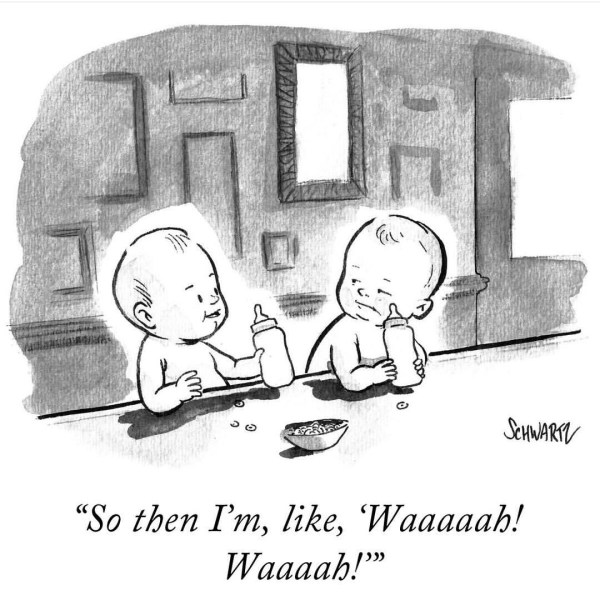
Eight Things I Hope NOT to See on LinkedIn this Year

I’m hopeful that LinkedIn users will resolve to NOT do the following in 2025:

Bitching about Ghosting

“Don’t call us, we’ll call you…” has been around since the 1900s.  Ghosting isn’t going away no matter how many annoyed applicants end their posts with “do better.”

#livinginthepast

“Fear” Adverts from “Career” Coaches and Outplacement Firms

The only thing more obnoxious than a 28-year-old wanna-be influencer touting her three years of insight and experience on how to navigate today’s “incredibly challenging” job market is a 32-year old bro touting his superior networking skills. (Daddy and/or your frat bro hooking you up with a gig isn’t the flex you think it is.)

  #nepobaby

Sycophants

Your off-site was productive?  Great.  You’ve got a new CEO?  Congrat’s. Your BFF was promoted? Nice. LinkedIn doesn’t need another obsequious corporate sycophant tearfully proclaiming how they “couldn’t be more proud to be associated with such an outstanding group of individuals.” 

Unless your ass-kissing is one of your KPIs, spare us.

#embarrassed4U

CEOs, Recruiters, Founders, et al “humble brags”

You’re fully remote?  Good for you!  You hired someone who had a 2-year gap in his/her resume?  I’m sure they were eminently qualified.  You hired a fresher/woman/minority/disabled individual who didn’t have the perfect resume, but you…with your tremendous leadership and magnanimous character … saw their potential? 

Stop sniffing for public praise and accolades for the most basic levels of decency.

#needy

Open to Work Banner

Si o No?  Stop writing about it!

#NoOneCares

Age Discrimination

You’re a white, Anglo-Saxon male, over 50, and now, for the first time in your ENTIRE life, you’re finding that you’re not in the preferred demographic? WOW, what must that feel like!?!  Tell me more about how unfair corporate life is! Twenty-five years in tech, I’m sure I don’t know what it’s like to be passed over in favor of some crony C-Student bro or a cheap H1b…

PS:  Maybe it isn’t age discrimination? Maybe the field has leveled, and you really aren’t all that?  Try working “twice as hard,” like the rest of the underachievers you used to look down upon!

#whiner

WFH v. RTO

If you don’t want to work on site, don’t.  If you want to go into an office, go.  Stop trying to convert the heathens.  You’re as likely to convince a MAGA supporter that tariffs are inflationary.

#snore

“Behold” my Achievement

Unless you just won the Nobel Prize, no one is interested in your Udemy, Coursera or company-training certs. Add them to your profile.

Your kids?  #facebook

+++++

Copyright 2025 Pierce/Wharton Research, LLC. All rights reserved. No part of this post shall be reproduced without permission.

I Don’t Consent to Having this Interview Recorded (and You Shouldn’t Either!)

Virtual meetings and their respective recordings have been around for about a decade, but now there is a notable uptick in recruiters requesting to record one-way and two-way interviews.  Why the change?  In two letters:  AI.

Never, EVER Allow Your Job Interview to Be Recorded

The main reason to opt out of recording is that you do not know how your intellectual property (IP) is going to used, how it will be shared, where it will be stored, nor who will have access to it.  In all cases, you permanently forfeit your rights to your words and image – they are now the exclusive property of the recruiter, the 3P service provider, and/or the potential employer.

Consider this all-too-common scenario:

Hiring manager wants to hire his cousin, Vinny, as his new Customer Service Manager.  Here’s the problem:  Vinny isn’t qualified.  Hiring Manager contacts a staffing firm, provides screening questions, and requests video recordings of all the top applicants – even if they’re out of his price range.  He snips the best answers and insights from a dozen or so highly-qualified experts, and then wraps them into a script for cousin Vinny.  Vinny watches the interviews, preps his answers, records his interview, and voila’ is magically the best candidate. 

Sprinkle in a little high-tech corruption and H1b seat-selling, and you see the problem.

Never, EVER Consent to a One-Way Video Interview

One-way interviews are the epitome of employment catfish.  These are bogus companies or troubled companies, and your one-way interview is sold to a third party for AI ML training, and/or to prep others (see above).  In many cases, the JD posted is a bogus ghost job; that great salary is bogus, and you never seem to actually meet a bonafide client or even a person IRL. 

Never, EVER Write Essays

Similar to video interviews, essay responses are used for AI training or to coach other applicants on the “right” answers. 

If writing skills are essential for the position to which you are applying, it is better to provide links to samples or a blog.  Filling out custom questionnaires, documenting an approach to technical solutions, outlining your methodology to solving complex business practices… Nope.  Here’s a link to a White Paper, which is part of my personal portfolio and copyrighted publications.  I’ll solve your problems for money, not for free…..

Why Recording?

People who request recordings use two reasons. 

1) They’re doing this for YOU!! “I would prefer to focus on YOU – not taking notes!” This isn’t a Tinder date, this is work. I don’t need you to focus on me. I need you to extract the information you need to pass me to the next round. If you lack the skill to take notes during a meeting or an interview, you shouldn’t be a recruiter.   

2) It’s not them, it’s the client! The client is sooooooooooooooooooooooooooo busy that the only way for you to “get in front of the hiring manager” is to be recorded.  This is usually followed by a “….this is a very competitive position (or the hiring manager is a very-important-person), I would hate for you to lose this opportunity – EVERYONE is doing this now….”

Boundaries aren’t really a thing for most recruiters and staffing agencies, and who cares what someone’s made-up title is? My response is no response. Don’t take the bait, don’t argue your point.  If you asked them not to record, and they are pushing back, they’re only interested in data mining.

What to do?

By law, you are required to be informed if you are being recorded.  That notification is automatically displayed in most video conferencing applications, some more clearly than others.  If someone clicks record (with a breezy “I hope you don’t mind if I record….”) stop the interviewer and say that you would prefer not to be recorded. 

If you receive ANY pushback, exit the call. 

If you catch an attitude, or get ANY pushback, politely exit the call.  Pushback is a clear indication that they are data mining for a third party or collecting IP for other candidates. There’s no job for YOU.

Recording is NOT the Norm!

Legitimate, desirable employers are NOT the ones asking for recordings.  They’re smart enough to understand the implications of collecting, sharing, and storing these data.  These requests primarily come from lazy recruiters, and off-shore ghost firms – who come and go like fruit flies.  Many aren’t even in the staffing business.  They are using the staffing firm as a “front” for their data collection and other fraudulent activities.

Too often I see applicants say that they participate in these practices because they’ve been unemployed a while and “have no choice.” What these applicants are not understanding is that there is no job there. This whole thing is a ruse.

I Don’t Care What They Said: Don’t Expect Ethics from Anyone

Unethical and fraudulent hiring practices have been around for decades, but the tremendous amount of data that can be collected from a person via the application process has introduced a nasty side hustle for unscrupulous businesses.   Most of us know that certain demographic information, such as age, marital status, and the like cannot be requested, there are no laws that protect your image, voice, and IP/PI from being usurped and distributed, and that information is far more valuable.   

Moreover, unsuspecting and naïve, applicants are easy prey.  Most people are absolutely clueless about IP/PI collection, which is why these grifters can successful run different scams ranging from pretending to hire you (in order to collect identity and financial information) to tricking people into providing credit card and banking information for equipment “deposit,” training, and it goes on and on….

Opt-out.  You’ll be glad you did….

+++

Copyright 2025 Pierce/Wharton Research, LLC. All rights reserved. No part of this post shall be reproduced without permission.

Three Post-Covid Reasons Your Project is Failing

Projects fail for all kinds of reasons – here’s a few things that are different after Covid…..

You’re Trying to Manage a Team on Chat

Don’t get me wrong; I’m not anti-IM. Chat, and its appropriately named cousin, Slack, are fine for a QQ to an individual or small group. What it doesn’t take the place of is a well-run meeting, goals, action items, workflow tools, documented requirements, baseline reporting, status, deliverables – ya know – the “work.”

It’s amazing how many people think nothing of constantly interrupting their highly-paid resources to insist they participate in circuitous Chat threads. Pre-Covid, no one would have ever said to their boss or co-workers, “Follow me around today and listen to all my conversations. That way, you’ll know what I’m doing.” How is constantly being interrupted by chat any different?

Talk is cheap, and the cheapest of all talk is chat.

I recently attended a meeting with a client’s finance team. They were proposing changes to their enterprise Rev Req process. Flow chart? Business Rules? Requirements? SOW? Nope, the guy pulls up a chat from three days ago, and proceeds to add people to the thread – really?

Talk is cheap, and the cheapest of all talk is chat. If you want to be 100% sure that your project will run over budget, over schedule, and your team will be lost in the chum and churn of incomplete direction, “manage” your projects via Chat.

Drug Problems

Maybe you heard: The United States has a drug problem, and that drug problem definitely has gotten worse since Covid. I’ve spent more than a decade working as a Fixer, and I can tell you that the root cause of more than one project / business failure is a key individual (or several individuals) with a drinking or drug problem.

It’s important to keep in mind that just because someone isn’t shit faced drunk at work doesn’t mean they don’t have a drinking problem. “Functional” drunks will insist that they’re not drinking during work hours; ergo, they don’t have a drinking “problem.” However, the effects of their drinking are evident. They’re chronic no-shows. They’re constantly sick, late, a million doctor, dentist, and food poisoning excuses for not showing up. Forget about a morning meeting. They can’t get out of bed. They’re unreliable. They can’t complete anything. When confronted, they will push their work (and blame) on to others. They vacillate between belligerent, and a professional victim, which makes you want to avoid them and assign their tasks to others, which is exactly what they want. #enabler

Another Post-Covid change is the ubiquity of Adderall and its many cousins. Unlike the drunk – who can’t accomplish anything – the Adderall Overachiever thinks they’re super-super productive! They have no problem calling you at 10 PM (spinning like a dreidel) because they really, really need your help with the font for tomorrow’s PowerPoint presentation. (Hint: NOT Comic Sans)

About 10 years ago, I had the great misfortune to work with a man who had a serious Meth problem. I was green in my career, and a deer in the headlights; I didn’t know what I was dealing with then. Now, I know the signs. And, when I see people sniffing, unfocused, babbling, spinning, and looking exhausted, I don’t think they’re “high energy” or insomnia, or allergies – I know they have an amphetamine problem.

I work in a business that is complicated, difficult, and dense, and the last thing I need is someone so jacked-up they cannot follow even the most basic conversation.

Since Covid, I’ve seen a rise in upper use in two groups: Women (trying to do it all) and new grads, many of whom are just not used to working 8-10 hours a day, day-after-day, week-after-week. Both of these groups are trying to “cram” their lives, loves, and responsibilities into too-few hours. And, much like Lucy in the Chocolate Factory, they are failing.

If you find yourself in a situation where you have a client or (god forbid) a boss with a drug problem, start looking for a job immediately. Forget about HR, or confronting anyone. This situation is NOT win-able. There’s nothing you are going to do, nothing you are going to say that will make that person change. Nothing. Not anger. Not sympathy. Nothing.

Life isn’t an “Afterschool Special.” It’s more like “Intervention.” It will take you about 2-3 months to figure out what going on. Once you do, create space between you and Adderall Annie, or Day-Drinkin’-Dan, and funnel ALL your energy into your exit plan. If you don’t, this person will eventually “Nurse Jackie” you. You’ll be fired, blamed for everything, and they will continue on as they have before.

You’re Still in Crisis Mode

It’s hard to believe it’s been two years since the advent of Covid. When it hit, all business rules were thrown aside, and “Crisis Mode,” took the place of planning. Business pivoted their e-com sites to accommodate a flood of delivery methods, “Essential” workers were defined, money was quickly appropriated (no business case needed), to mission-critical efforts – every fiber of our corporate being was in crisis management mode.

Here’s the problem: Humans are creatures of habit, and crisis mode has become our new habit.

During Covid, workers capitulated to excessive demands for overtime. Now? Quite quitting and labor strikes are in the news. And, it’s not just workers who are setting boundaries. Check signers are waking up as well. During the past two years no one paid any attention to ROI, cost-benefit, roadmapping, priorities – who had time for that mammsy-pammsy stuff? We’re in a crisis!

Covid was like a big fire; no one questioned thousands of people carrying buckets of water. Now, the smoke has cleared, and we realize that if we had better equipment, we wouldn’t need as many people with buckets.

You’ve surely heard corporate leaders feigning apologies as they layoff “over-hired” water bearers. All companies are evaluating their staffing, their roadmaps, and even their missions. But, what corporate leadership is not saying is that in just two years, they’ve actually become a bit rusty (and a little too comfortable with Slacking-in direction). Many have fallen out of the practice of truly managing a business. Now, we’re starting to hear again questions like: What, exactly, are your metrics? Where’s the market research? Where’s the business case for the $1.3 system upgrade? What’s the ROI? Where’s the depreciation schedule? Projects that cannot answer these questions are being axed, and the bucket brigade is being axed with ’em…

Final Thoughts…

Complacency is frequent companion of hubris, and even though making it through the past few years is an accomplishment, don’t think that it’s a vaccination against failure. The world has changed, but the purpose of business has not. The goal of running a business is to make a profit, not just have a high stock price.

The next couple years are going to be rough. Regardless of your press, your followers, or your brand: If you’re not running your business well, running your projects well, and making a profit, you won’t be here much longer.

+++++

Copyright 2025 Pierce/Wharton Research, LLC. All rights reserved. No part of this post shall be reproduced without permission.

W2? 1099? C2C?

One of the questions I get asked most often from those considering contract work is whether to work as a W2 contractor or should they consider 1099, or incorporate so they can bill corp-to-corp (C2C).  The answer is – it depends – and it mostly depends on you.

If you are going to contract long term, or you have a particular expertise that you sell, eventually you will move from working as a W2 Contract Employee to being Independent / Incorporated – in other words: A vendor.  These are not mutually exclusive, BTW. When you’re a vendor that means that you could be billing on a 1099 basis or you could be incorporated and use your corporation to bill the agent or client corp-to-corp (C2C). 

When you choose to bill as an independent vendor that means you are viewed as a business, which is a separate legal entity, and completely different from being an employee. When you’re independent, you have all the privileges and responsibilities of a business owner.

“Responsibilities” is the key word here:  If you choose either 1099 or C2C, you will take home a lot more money than you would as a W2 Employee. But if you are not prepared to handle the responsibilities (and risks) of being self-employed, mo’ money mo’ problems.

Whether you are a sole proprietor, in a partnership, or a principal of a corporation, if you are deriving “Schedule C” income, you are responsible for obtaining business licenses, paying business taxes, keeping accurate records, maintaining general liability, and other types of insurance.  If you’re working as a vendor, you may need to purchase and maintain your own tools, equipment, prepare your own contracts, invoices, and track your payables and receivables. Some clients will provide you a 1099 form for taxes; some do not. Sometimes they’re accurate; sometimes not.  Regardless, you are responsible for an audit trail of your gross receipts and expenses, maintaining bank records, and insuring you adhere to all applicable laws. If there is a discrepancy, you need to be prepared to prove everything.

When you are independent or incorporated, you are a vendor. Instead of a job description, you have a statement of work (SOW). The SOW details what you are to accomplish for the client, a time frame for doing so, and what are the payment and acceptance criteria. SOWs can be very general or very specific. There’s no “standard” SOW. Its specificity varies by the complexity of the project and your relationship with the client.

When you are a vendor, the client cannot dictate the manner and means by which you complete your work.  So, if you wanted to assembly your PB&J in a different order in your kitchen that is your prerogative. The client can only accept or reject the work.

Most importantly, if you are billing as independent or incorporated, you do NOT have the same legal protections as you would if you were a W2 contract-employee. You are a vendor, just like the Crystal Geyser guy. If the customer decides to go with Sparkletts, Crystal Geyser doesn’t file for unemployment. If the delivery truck gets stolen, Crystal Geyser doesn’t ask the customer to buy them a new one. Similarly, like the Crystal Geyser vendor, you also have an implied warranty with your service.  If something goes wrong, your service is defective, you drop your Pepsi on someone’s laptop, it’s not a “My bad!” you are financially liable for that expense.  If your work is on the critical path of a project, be sure to talk to an insurance agent and your client to ensure you have the coverage you need.  If you own things – like a house – and want to keep it, you’ll need to incorporate.

You want to run a business?  Make big bucks?  We live in a litigious society. Don’t take chances.

Unlike W2 workers, your client will want to pay you every 30 days just like they pay all their other bills. But, what if your client doesn’t pay you in 30 days? What if they pay you in 45 days or 60 days?  Or not at all? How long will you keep working without being paid?  A week?  A month?  Two months? How will you collect if they don’t pay? (A big concern in today’s “virtual” world.) What if they claim your work is defective, and they refuse to pay?   Similarly, who pays for your travel expenses? Are you putting them on your own credit card and waiting for client to reimburse? What if they don’t reimburse you or take months to do so? I’ve worked in big corporate offices my entire life: You’d be amazed how many rich companies don’t pay their bills on time.

If you suffer from people pleasing, can’t say no, can’t write a contract, could never see yourself suing someone, or all this sounds just too unpleasant for you, don’t waste time billing as an independent or incorporated contractor. I’ve listened to lots of stories (mostly from women I’m sorry to say) who thought they could handle this kind of relationship, and ended up being taken advantage of by someone who was really, really going to pay them as soon as <somecrisis> passed.

There’s a certain amount of cold, hard, capitalism required when you truly work for yourself. I can assure you that no one is more unpleasant than someone who owes you money. You can’t put up with excuses. Other people’s bills and emergencies and sick kids are NOT your problem. Always track your hours and tasks; always keep copies of your work.  Be prepared to withhold work until you are paid for it.  Be prepared to walk off the job if you’re not paid on time, and be prepared to sue. 

If you have a tough time sticking up for yourself, can’t handle people’s anger, or you’re afraid of being “mean,” being a vendor is absolutely not for you.

++++++++++++++++++

Excerpted from: The Temp Job: A Survival Guide for the Contingent Worker. Copyright 2021. Pierce/Wharton Research, LLC.  All rights reserved.  No part of this post shall be reproduced without permission. info@piercewharton.com.

Four Reasons People Just Don’t Want to Work (for YOU!)

Employer’s are facing a long-overdue reckoning, and like all reckonings, rather than reflect inward, the focus for many has been external. They’re angry at their inability to control events, and blame others for their predicament.

The blame du jour: Lazy people, who don’t want to work…

……for you.

(Never has a prepositional phrase been more important!)

Here’s four reasons why …..

You’re Disinterested and Indifferent

Consider a job applicant who is bored, disinterested, and going-through-the-motions in the interview. Even worse, what if the applicant were rude, curt, or clearly not listening? Would you hire them? Of course not.

Employers are being interviewed by labor, and they’re blowing it because many of your hiring managers simply do not know how to behave in an interview. They’re rude, disinterested, and entitled. As a result, people just don’t want to work for you. Do you blame them?

You Took Too Long

You’re bored, disinterested, and then call me three weeks (three months!) later and say now you’ve decided to hire me, and I need to call you back right away….yeah, right.

The days of “keeping your resume on file…” went out with the Selectric typewriter. It doesn’t work that way. (It really never worked that way.)

A tight labor market is like a tight housing market. Be prepared to act quickly, compromise, and pay over asking. If you can’t do that, stay out of the market until you’re serious about buying.

You Came in Under my Minimum

Too many employers tell you they can pay your asking price but really have no intention of doing so. Similar to the housing market, the idea is that once the applicants’ commit to the hiring process, they will become so “invested” in closing the deal, that they will capitulate on their original ask for compensation.

This is not the market in which to call people’s salary “bluff.”

If I tell you that I’m seeking $45/hr, you drag me through weeks of interviews only to offer me $43/hr (wink), I’m not amused or impressed with your negotiation savvy, I’m pissed.

Result: I ghost you. I tell all my friends what an asshole you are, and (possibly) post a negative Glassdoor review – permanently damaging your brand. All for the bargain price of $2 an hour. Well done.

You’re Too Far Away

If you’re in a business where I can’t work virtually, the time and distance of my commute may make any job – regardless of compensation – difficult to fill. Restaurants in expensive urban areas, or hard-to-get-to resort communities have the additional challenge of the high cost of living making it unlikely any of the help would be housed in the immediate vicinity.

Consider a commute bonus, or other ways to mitigate that expense for your employees. Otherwise, you’re going to be short-staffed, and the staff you do have will be overworked making them much more likely to quit.

Finally…

This labor shortage didn’t just happen – it’s been coming for decades – the perfect storm of Covid, bad corporate behavior, retirement/death, and ubiquitous social media has weakened the stool upon which capitalism has balanced for decades.

Historically, businesses never worried about competing against one another for talent. Now that they must complete, many simply do not know how.

If you’re still clinging to the notion that the tight labor market is about lazy millennials or enhanced unemployment benefits, and any minute we’re going to “go back” to the way it was, you’re flat-out wrong. Our world, has fundamentally changed, and if there’s one thing we know about change is that it never changes back!

###

If you enjoyed this article, check out some of my my posts and podcasts on employment, interviewing, and the contingent job market. Thanks for reading!

###

Copyright 2021 Pierce/Wharton Research, LLC. All rights reserved. No part of this post shall be reproduced without permission.

Phishing for Employment Docs

Of course, you would never provide a telemarketer or Nigerian Prince your passport, credit card, or banking information. Those we know. But what if it were a Zoom call, and then you were offered a great job? How much diligence would you do before you turned over your ID, SSN, DOB, and a whole bunch of other personal financial info?

Phishers are using Video

Here’s how it works: You are a high-income individual. You are contacted by a head hunter and asked to interview for a position at a desirable, well-known corporation. The video interview goes well, and a day or two after the call, you receive a verbal offer (via the agent or “implementation partner”) and a request to start ASAP. Congratulations! So happy for you!!  Now, please provide passport, social security, bank account, DOB so they can expedite your offer letter. You never hear from them again.

Signs of a Phisher

  • There’s a HUGE rush for you to start; they need your info ASAP
  • Everything is verbal. You email, they call. You ask for docs, they call.
  • They want a “deposit” for your equipment, a credit card is fine…what’s the security code?
  • Staffing or “implementation partner” has a thin website. No corporate officers, no street address, no phone numbers, no contact information.
  • You’re not 100% sure to whom you report.
  • Offer, contract, or SOW is coming soon. When it does, it looks like it was put together by a 3-year old.

Trust Your Gut

In all cons, the mark inevitably says, “I knew something was wrong..…” Closely followed by, “But, everyone was SO nice!”

The con is counting on your want of the job. Stay focused. Even if its a dream job (and they always are), if something seems off, don’t ignore your Spidee-sense! Cons are charming and charismatic; that’s how they gain your CONfidence !

Remember: Just because there’s a person on video asking you questions that doesn’t mean they are who they say they are. Anyone can ask a question, and far too many interviews are completely one-sided! 

Cons choose common names, so they’re hard to Google. Others Catfish legitimate LinkedIn profiles, especially if they lack profile pictures. Did the “client” vid-in or not? Do you have legitimate contact information?  Multiple email domains with multiple parties? Offshore? If so, you have reason to be concerned.

Do Your Diligence

Before you turn over your ID and financial information to a staffing agent or prospective employer, be sure that you’ve done your diligence!  You have a real contract, employee handbook, and benefit package.  Ensure you understand who owns the company, where they are physically located, and who, exactly, is responsible for paying you.  If you have any concerns, be sure to contact your prospective manager or client contact. Get all your questions answered – in writing – before you turn over any of your personal information.

Say Nothing

Once you’ve discovered the con, cut-off all contact, and resist the urge to call them out on it! They will only assure you that you are mistaken, and details you impart about how you caught on, what they did wrong, where they were sloppy, will only help them to improve their process.  Check your ego. Click delete. Select Block. And, keep your brilliance to yourself!

###

If you enjoyed this article, check out some my posts and podcasts on employment, interviewing, and the contingent job market. Thanks for reading!

###

Copyright 2021 Pierce/Wharton Research, LLC. All rights reserved. No part of this post shall be reproduced without permission.

Blog at WordPress.com.

Up ↑